Are electric go-karts better than gas-powered karting?
Are electric go-karts better than gas-powered karting? As a project that blends entertainment and competitive sports, karting has always been popular among people of all ages. Traditional fuel-powered karts are known for their powerful mechanical performance and thrilling engine roar, while electric karts are rapidly gaining ground in emerging business scenarios thanks to their environmental friendliness, low noise, and reduced maintenance costs. So, if you are an operator or planning to invest in a karting project, how should you choose? The answer isn’t one-size-fits-all. Different customer groups, venue conditions, and experience expectations all play a role in the decision. This article provides a comprehensive comparison across five key dimensions to help you make an informed choice.
Operator’s perspective: cost, management, compliance
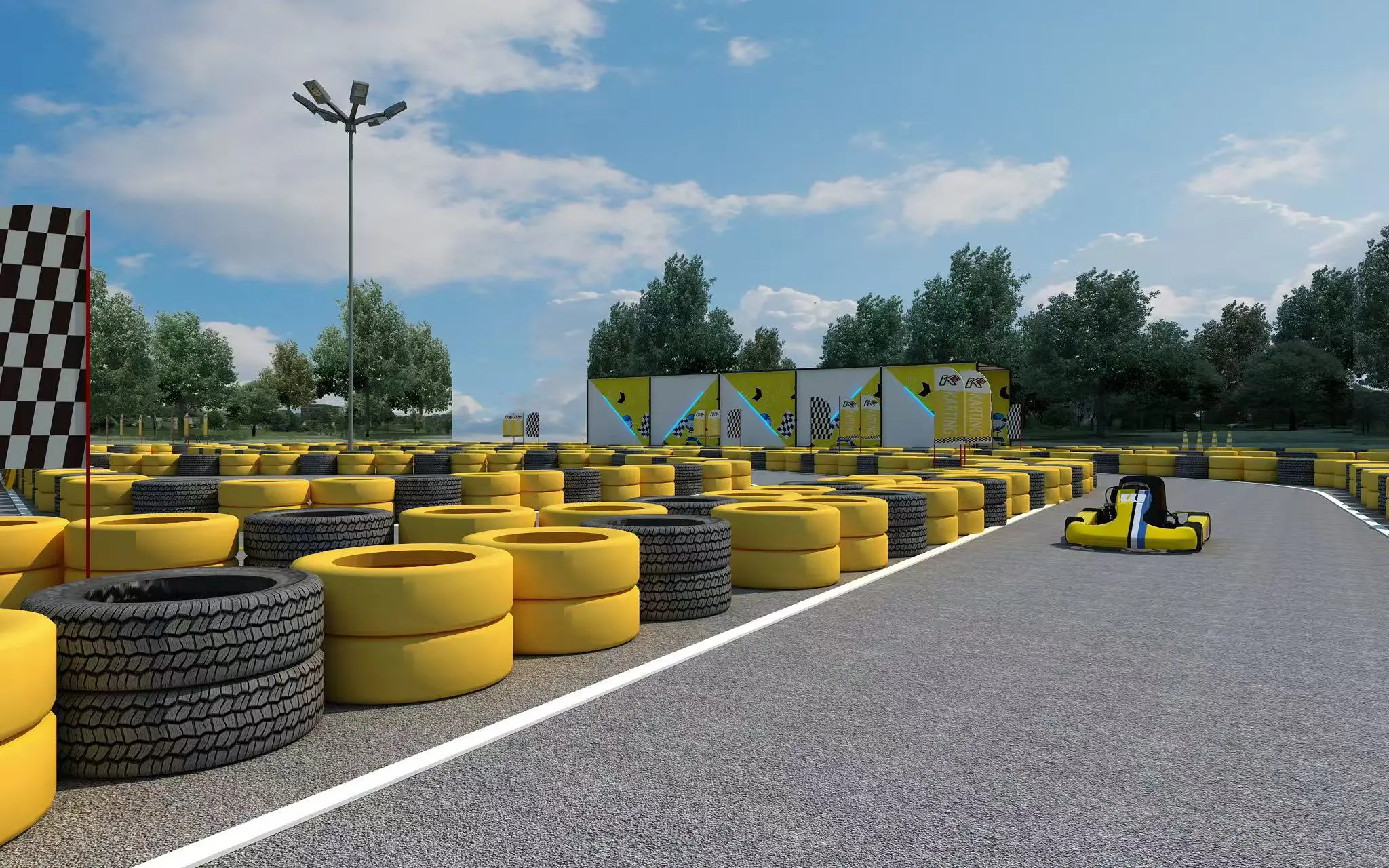
Let’s start with what operators are most concerned about: return on investment and management pressure. The maintenance cost of electric go-kart is relatively lower, there is no oil, spark plugs, oil circuit and other complex wearing parts, the main concern is the state of the battery and electronic control system, maintenance and repair is relatively simple. At the same time, electric go-karts do not have tailpipe emissions and basically do not produce high decibel engine noise, making it easier to pass environmental protection and fire protection approvals, and especially suitable for operation in crowded commercial bodies or urban complexes.
In addition, electric go-karts can work seamlessly with intelligent Internet of Things (IoT) management systems, such as code-sweeping vehicles, remote speed limits, membership systems, card timing charges and other digital tools, making daily management more efficient and facilitating the later expansion of marketing tools. Fuel go-karts are slightly passive in this regard, relying more on manual maintenance and manual management, but it still has a stable profitability in large outdoor venues or professional off-road projects, after all, refueling fast, long continuous operation is more secure.
Choice of Age Groups: Adults vs. Children
Choice of Age Groups: Adults vs. Children
From the perspective of the age structure of players, adult players, especially those who love speed and mechanical driving sense, tend to favor fuel karts. The engine’s back-propulsive feeling when the gas pedal is pressed down, the sound wave when the speed rises, and the vibration of the mechanical structure transmitted to the arms and soles of the feet can bring pure driving pleasure, which is difficult to be completely replaced by electric cars.
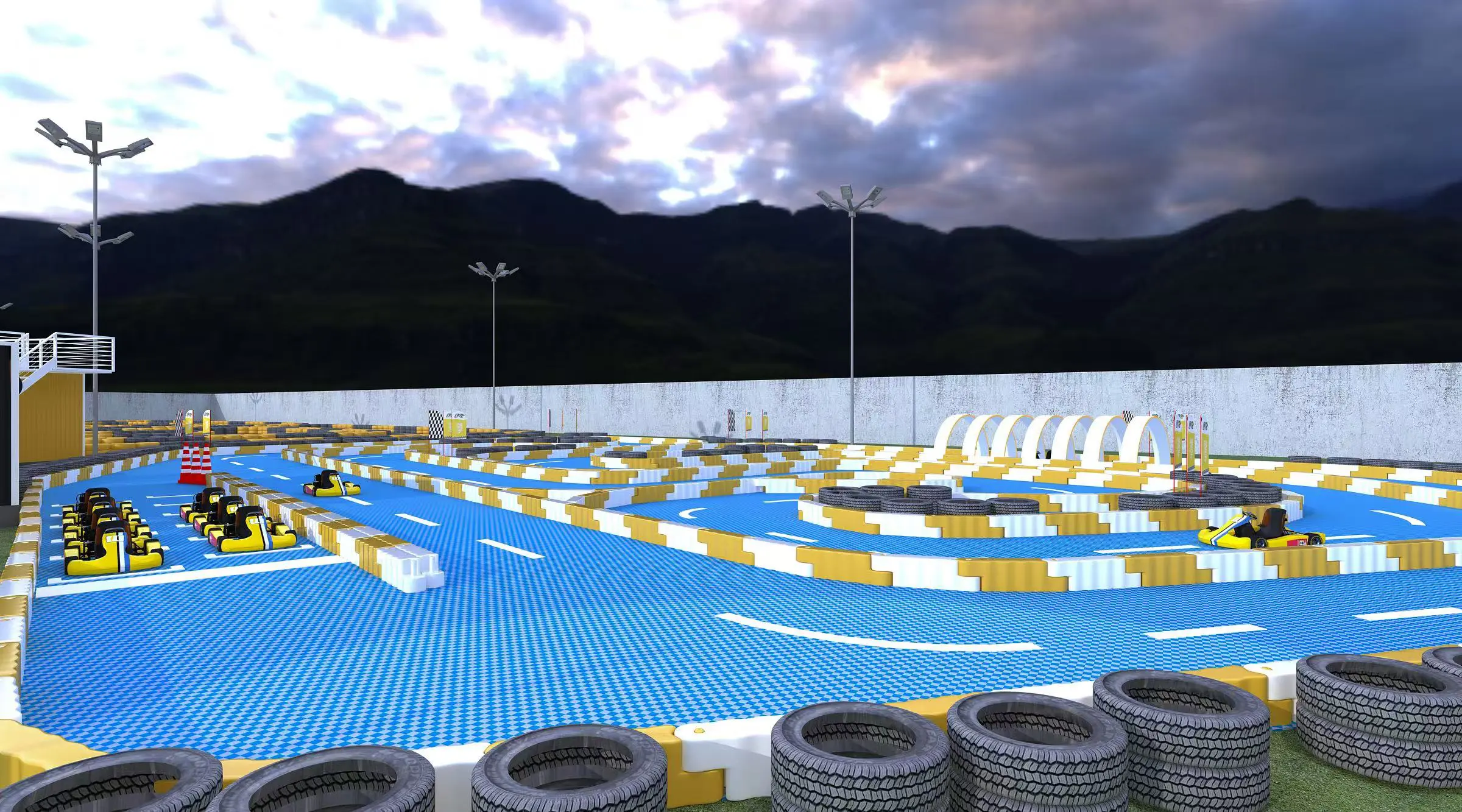
For children and teenagers, including parent-child family groups, electric go-karts are obviously more suitable for the needs. The characteristic of electric go-kart motor is that it can release maximum torque at zero speed, which means that the start is very smooth and controllable, avoiding the phenomenon of “scurrying” in some cases of fuel cars, so that beginners can experience the fun of driving with more peace of mind. At the same time, the power output of the motor is more linear, not fast or slow, so the speed control of the vehicle in the curves is more tolerant, and both children and parents can adapt quickly.
Plus, electric go-karts do not have the smell of motor oil or exhaust fumes, and after playing, clothes are still clean and fresh, which is very important for parents and children who pay attention to hygiene and comfort. Overall, fuel is the mainstay for adult competition and professional training, while electric is better for youth and parent-child entertainment, which is a mainstream distribution in the market today.
Indoor vs. Outdoor Scenario Comparison
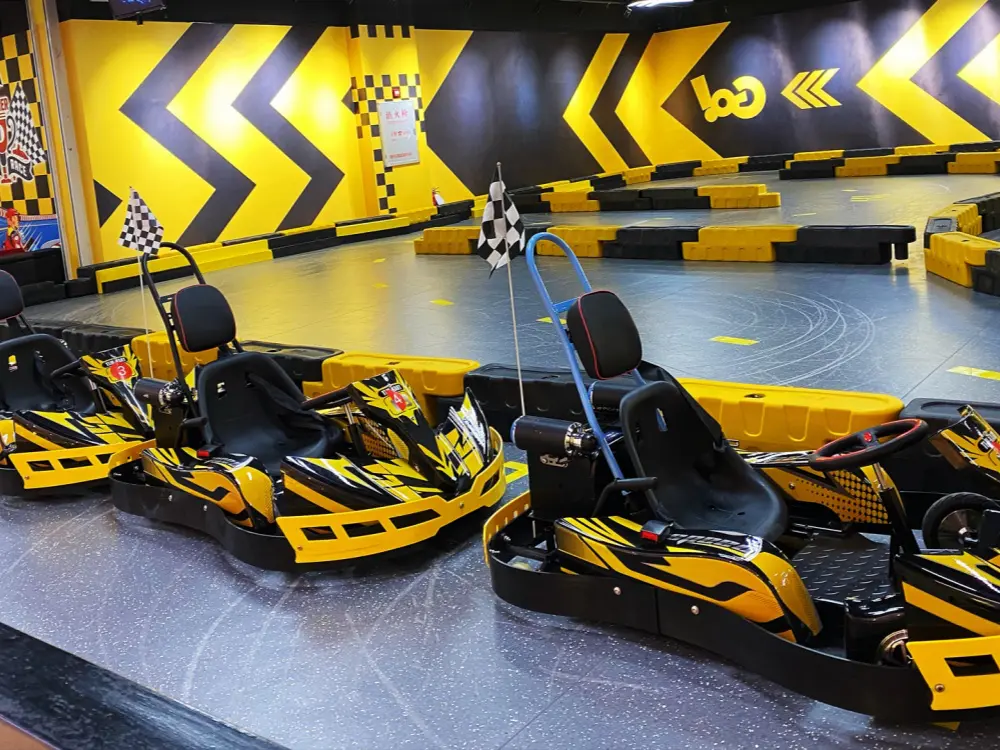
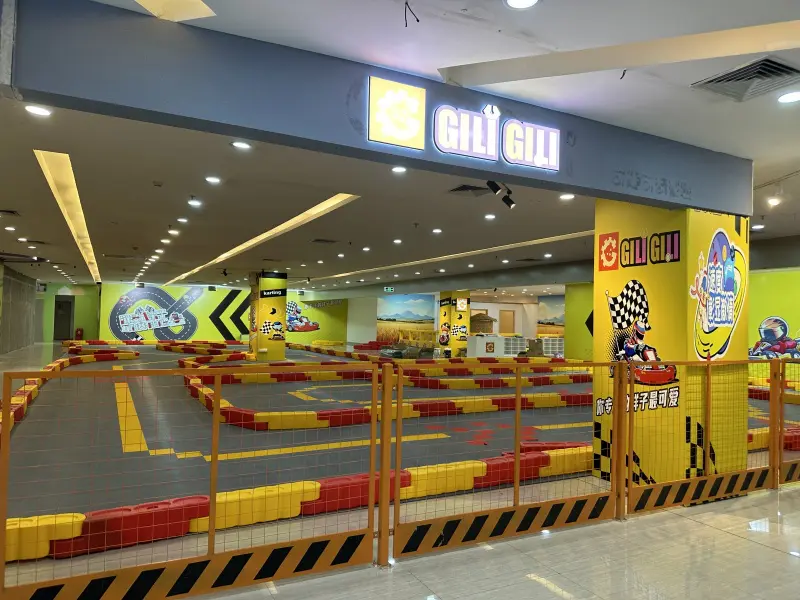
In the indoor scenario, the advantages of electric go-karts are very obvious. Due to the emission and noise of fuel engines and the risk of open flames, it is basically impossible to operate safely in an enclosed or semi-enclosed space. Electric go-karts, on the other hand, have virtually no emissions and are basically free of noise pollution, which is very much in line with the operational needs of shopping centers, malls, entertainment zones, and trendy playgrounds. In addition, electric vehicles have a higher degree of intelligence, which is convenient to combine with VR and AR interactive systems to enrich the scene experience and expand more “immersive entertainment”.
In outdoor scenarios, especially cross-country or professional large-scale race tracks, fuel go-karts still have advantages. It has strong power continuity, faster refueling, and continuous high load operation, which is especially suitable for hot and high temperature or high humidity natural conditions. In addition, fuel cars are more likely to play in the big drop, gravel, mud and other complex environments through the advantages of these terrains is more difficult for electric cars in the short term.
The table below gives you a visual comparison of the advantages and disadvantages of electric go-karts and fuel go-karts in different scenarios:
| Comparison Dimension | Electric Go-Kart | Petrol Go-Kart |
| Emissions / Environmental | Zero emissions, environmentally friendly | Emits exhaust gases, requires ventilation and environmental controls |
| Noise | Low noise, suitable for crowded environments | Loud noise, requires soundproofing or outdoor use |
| Maintenance Cost | Easy maintenance, fewer consumables | More complex maintenance, more wear-and-tear and fuel system parts |
| Terrain Adaptability | Suitable for indoor / flat surfaces | Suitable for outdoor / off-road and complex terrains |
| Energy Replenishment | Battery swapping/charging, safe and convenient | Refueling is fast, ideal for continuous heavy use |
| Acceleration Response | Instant torque from motor, rapid start | Requires engine rev-up to reach peak torque |
| Smart Features | Easy integration of QR code login, point system, remote speed limit, kids mode, race mode, etc. | Requires additional hardware and manual operation |
Experiencer Preferences: Sense of Speed, Intelligence, and Gameplay Innovation
Finally, from a player’s point of view, experience preferences are also influencing choices. Some racing enthusiasts are looking for a real, rough mechanical driving feeling: the directness of the throttle response, the roar of the engine at high revolutions, and even a little bit of vibration and heat, which are precisely the core charms of fuel karts.
But another part of the players, especially young people and family users, will pay more attention to “intelligence” and “playability”. The motor of electric karts can release maximum torque with zero delay, and the acceleration range of 0~20km/h is even more than that of fuel cars with the same displacement, especially bringing a faster starting pushback feeling, which makes most recreational players feel more exciting. As the power output of electric go-kart is very linear, it is smoother when driving in continuous curves, and the error tolerance rate is bigger, not easy to lose control and crash due to over-pressing the electric gate, which is also the key reason why it is suitable for the entertainment and parent-child market.
In addition, electric go-karts are highly integrated with digital systems and can support a variety of intelligent functions such as remote speed limit management, swiping or scanning code to start the vehicle, online points ranking, switching between kids’ and race modes, and can be combined with VR or AR to create more innovative ways to play. This kind of scalability is a “trendy” attribute that young users will value in the future.
Conclusion
Overall, electric go-karts are not simply replacing fuel go-karts, but bringing a brand-new solution for the go-karting industry that is more environmentally friendly, lower-maintenance and more digitalized. If your target customers are mainly teenagers, parents and children, and the location of the venue is inclined to business districts or cultural tourism projects, then electric karts are definitely the first choice; while adult players or large-scale cross-country outdoor projects still need to retain the fuel model, to ensure the continuity of power and adaptability to complex terrain. In the future, many clubs may adopt the “electric + fuel” hybrid operation program to flexibly respond to the needs of different customers and different scenarios, which not only ensures safety compliance, but also takes into account the entertainment and profitability.



Leave a Reply
Want to join the discussion?Feel free to contribute!